
Shrine guide · Najaf, Iraq
Shrine of Imam Ali (as)
العتبة العلوية المقدسة
- Directions: we have not verified an exact map pin yet, so show a driver the Arabic name under “When you arrive”.
- Ziyarat: no checked text is published for this site yet.
If you are new to this
Imam Ali ibn Abi Talib (as) was the cousin and son-in-law of the Prophet Muhammad (s). He was fatally wounded in Kufa in 40 AH (661 CE). Shia Muslims believe he is buried in Najaf, and the city grew around his shrine. For Shia Muslims he is the first Imam, and visitors come to honour him, pray, and reflect on his justice and knowledge.
On this page
Part 1
Understand
Who Imam Ali (as) was and why Najaf matters to visitors. Each statement is labelled so you can tell established history from religious belief.
How to read this guide
Each statement is labelled so you can tell what kind of information it is.
- Historical record
- Widely documented in historical sources.
- Shia belief
- Religious belief held in the Twelver Shia tradition.
- Accounts differ
- Sources disagree. We note this openly.
- Practical
- Visitor logistics. These can change.
Who was Imam Ali (as)?
Ali ibn Abi Talib was the Prophet’s (s) cousin, and the husband of the Prophet’s daughter Fatima (as). Imam Hasan (as) and Imam Hussain (as) were their sons. He was the fourth caliph in the Sunni reckoning, and made Kufa his capital. [al-Shaykh al-Mufīd] [Moojan Momen]
Twelver Shia Muslims regard him as the first Imam: the divinely appointed successor to the Prophet (s) and the first of the twelve Imams of the Ahlulbayt. [Moojan Momen] [Muḥammad b]
Read the full history and significanceHis death · Why Najaf?
His death
He was struck by Ibn Muljam during the dawn prayer at the mosque of Kufa in the month of Ramadan, 40 AH, and died of the wound shortly afterwards. [al-Shaykh al-Mufīd]
Why Najaf?
Early sources report that his burial place was kept hidden at first. Shia tradition holds that the later Imams identified the site at Najaf; other traditions proposed different locations. [al-Shaykh al-Mufīd] [Moojan Momen]
Najaf grew into a city and a major centre of Shia learning around the shrine. Today the shrine is administered by al-ʿAtaba al-ʿAlawiyya al-Muqaddasa. The Wadi al-Salam cemetery lies beside the city. [Moojan Momen] [al-ʿAtaba al-ʿAlawiyya al-…]
Part 2
Before you go
Religious obligations, recommended practices, shrine rules and general etiquette are listed separately. Recommended acts are encouraged, not required.
Recommended devotional acts
These acts are described in devotional sources as recommended (mustahabb). They are not obligatory.
Performing ghusl (ritual bathing) for ziyarat before visiting. [Shaykh ʿAbbās al-Qummī]
Approaching with humility, and reciting the words asking permission to enter (idhn al-dukhul) before going in. [Shaykh ʿAbbās al-Qummī]
Reciting a ziyarat of Imam Ali (as), such as Ziyarat Amin Allah, and offering a two-unit prayer of ziyarat. [Shaykh ʿAbbās al-Qummī]
Religious obligations
Ziyarat does not suspend everyday obligations such as daily prayers and modesty. The specific rulings depend on the scholar (marjaʿ) you follow, so check their published guidance for questions such as prayer for travellers.
Venue rules
Security checks operate around the shrines. Rules on entrances, bags, phones and clothing are set by the shrine administration and can change. Follow the instructions of shrine staff and security personnel, use the designated entrances and allow extra time during busy periods.
General etiquette
Dress modestly and move quietly. Give way to people who are praying, elderly visitors and families. Be careful with photography, especially of other visitors.
Questions of religious law depend on the scholar you follow (your marjaʿ). If you are unsure, please ask a qualified scholar.
Security, etiquette, accessibility and facilitiesWhat to expect on site, and who to ask
Security and facilities
Security checks operate around the shrines. Follow the instructions of shrine staff and security personnel and any posted signs, use the designated entrances and allow extra time during busy periods.
Facilities such as toilets, shoe storage, drinking water and step-free routes differ from site to site and between entrances. We have not verified them for each location, so please ask shrine staff on arrival.
Accessible routes and facilities can vary by entrance and by crowd arrangements on the day. Ask shrine staff for assistance on arrival.
Etiquette on site
Dress modestly, move quietly, and give space to people who are praying. [Ziyarat Guide]
Be considerate with photography, and follow any instructions given by shrine staff. [Ziyarat Guide]
Accessibility
Accessible routes and facilities can vary by entrance and by crowd arrangements on the day. Ask shrine staff for assistance on arrival.
Visiting with family
We do not have confirmed details for this yet. Please ask shrine staff on arrival.
Facilities
Facilities such as toilets, shoe storage, drinking water and step-free routes differ from site to site and between entrances. We have not verified them for each location, so please ask shrine staff on arrival.
Part 3
When you arrive
Arrangements on site can change, so follow the instructions of shrine staff and confirm anything important on arrival.
Show this to a driver
العتبة العلوية المقدسة
al-ʿAtaba al-ʿAlawiyya al-Muqaddasa
Spelling checked against al-ʿAtaba al-ʿAlawiyya al-Muqaddasa (Imam Ali Holy Shrine), official website, imamali.net, accessed 14 October 2026. on 2026-10-14.
Map
We have not confirmed an exact pin yet, so we link to a map search rather than a fixed point.
Search for it on OpenStreetMapGetting there
The shrine is in the old city of Najaf. Visitors usually arrive by road, and many combine the visit with Kufa, which is close by. We have not yet sourced reliable journey times. (source needed)
Nearby
The Wadi al-Salam cemetery lies beside the city. [Moojan Momen]
Part 4
During your visit
Prayers recited at the shrine. Show or hide each available layer, change the text size, or read full screen. We only publish a text after checking it against a named edition.
Ziyarat Amin Allah
زيارة أمين الله
A ziyarat of Imam Ali (as), commonly recited at his shrine in Najaf.
Full text not shown here
Please use a printed copy of Shaykh ʿAbbās al-Qummī (d. 1359 AH), Mafātīḥ al-Jinān..
Part 5
Reflect
Themes many visitors reflect on at this shrine. You do not need any background knowledge to use them.
Questions to take with you
- Where in my life am I treating someone unfairly, and what would put it right?
- What is one thing I want to learn properly before my next visit?
- How do I want to be remembered by the people I am responsible for?
Themes for reflectionJustice · Knowledge
Justice
Imam Ali (as) is remembered for insisting on fair treatment regardless of rank. Think about where you have power over others, however small, and whether you use it fairly.
Knowledge
Najaf has been a city of scholars for centuries. Consider what you want to understand better about your faith, and who you could learn it from.
Photographs
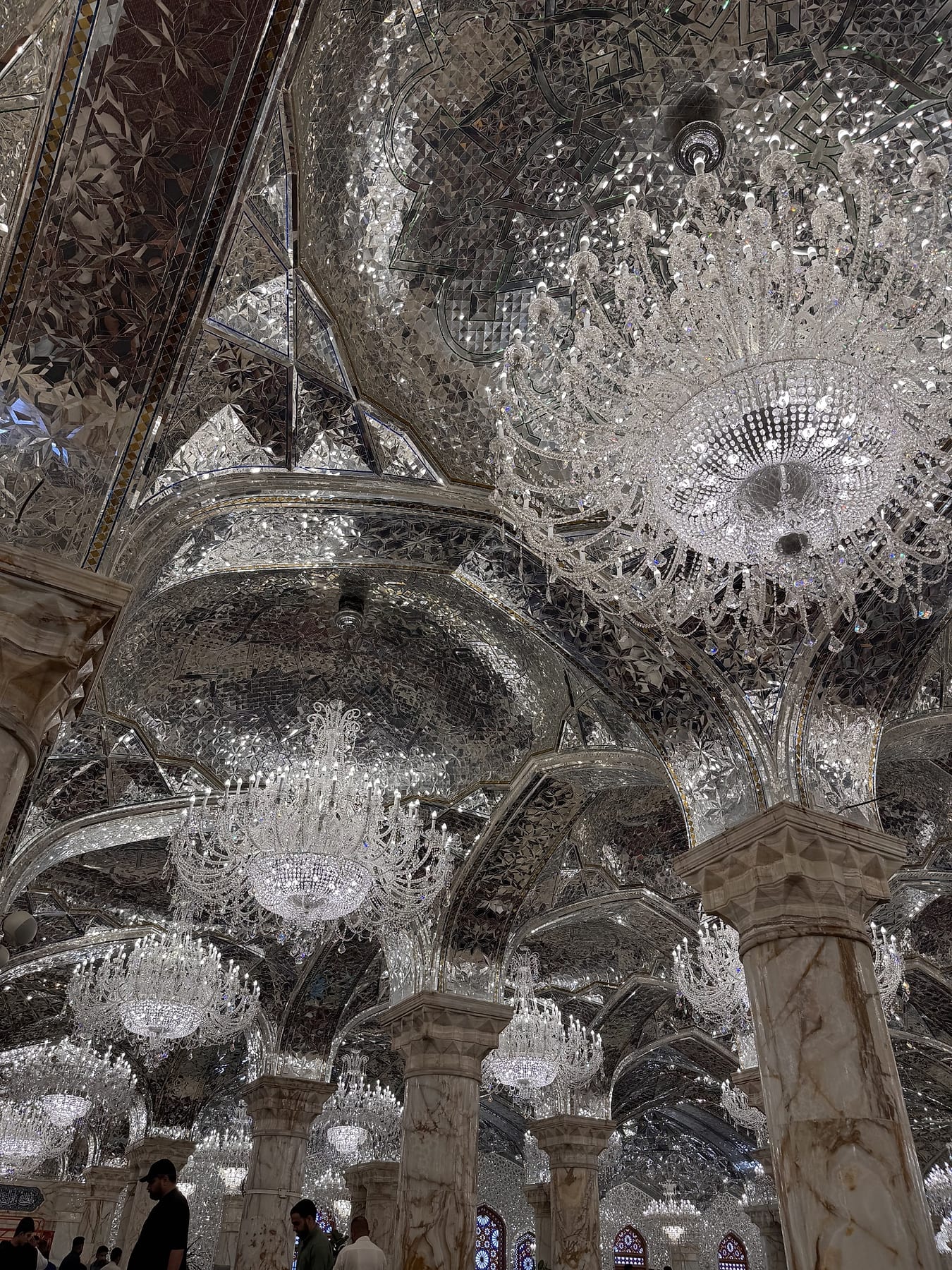
Mirror work and chandeliers inside the shrine. 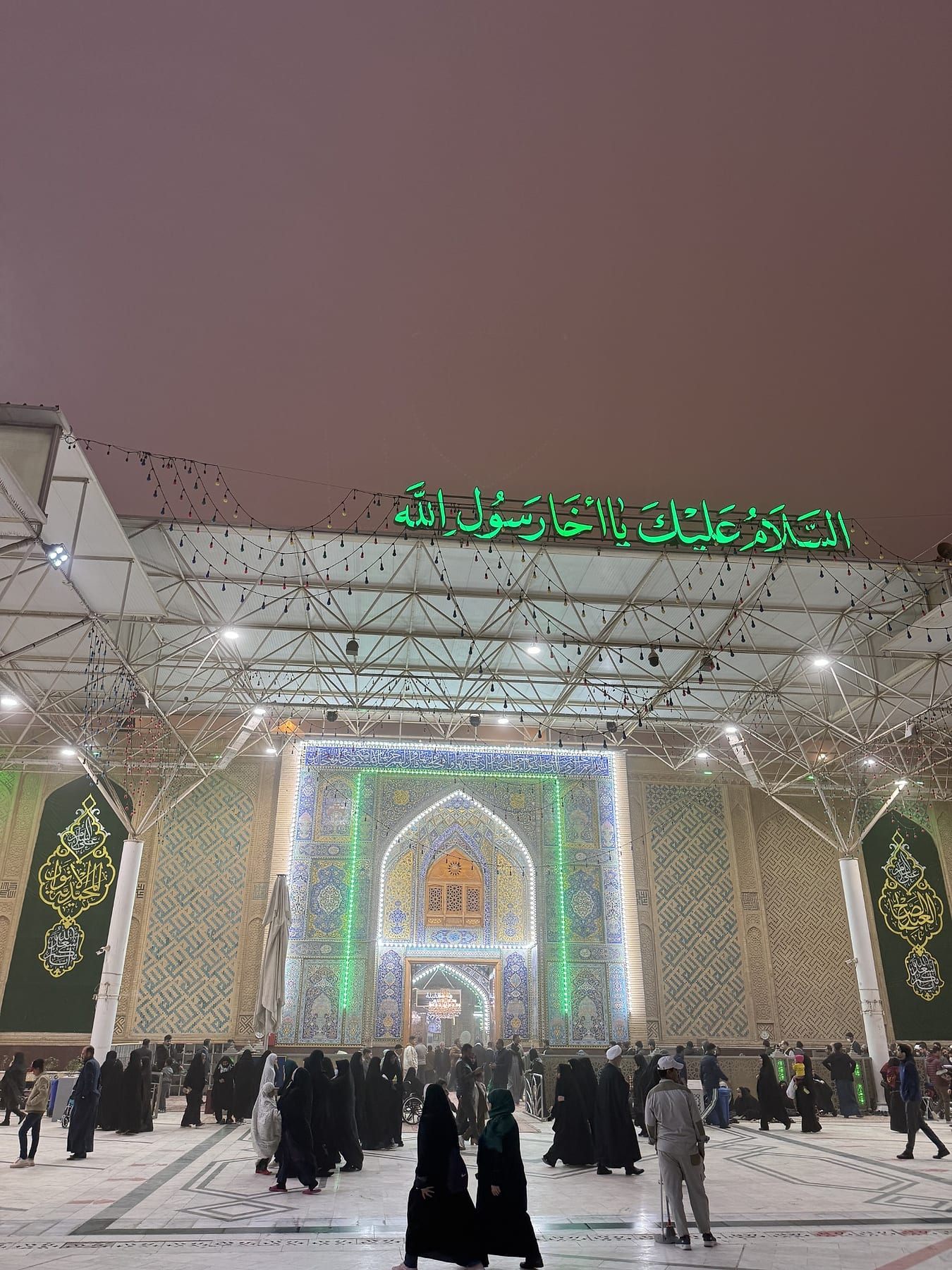
An entrance to the shrine at dusk. 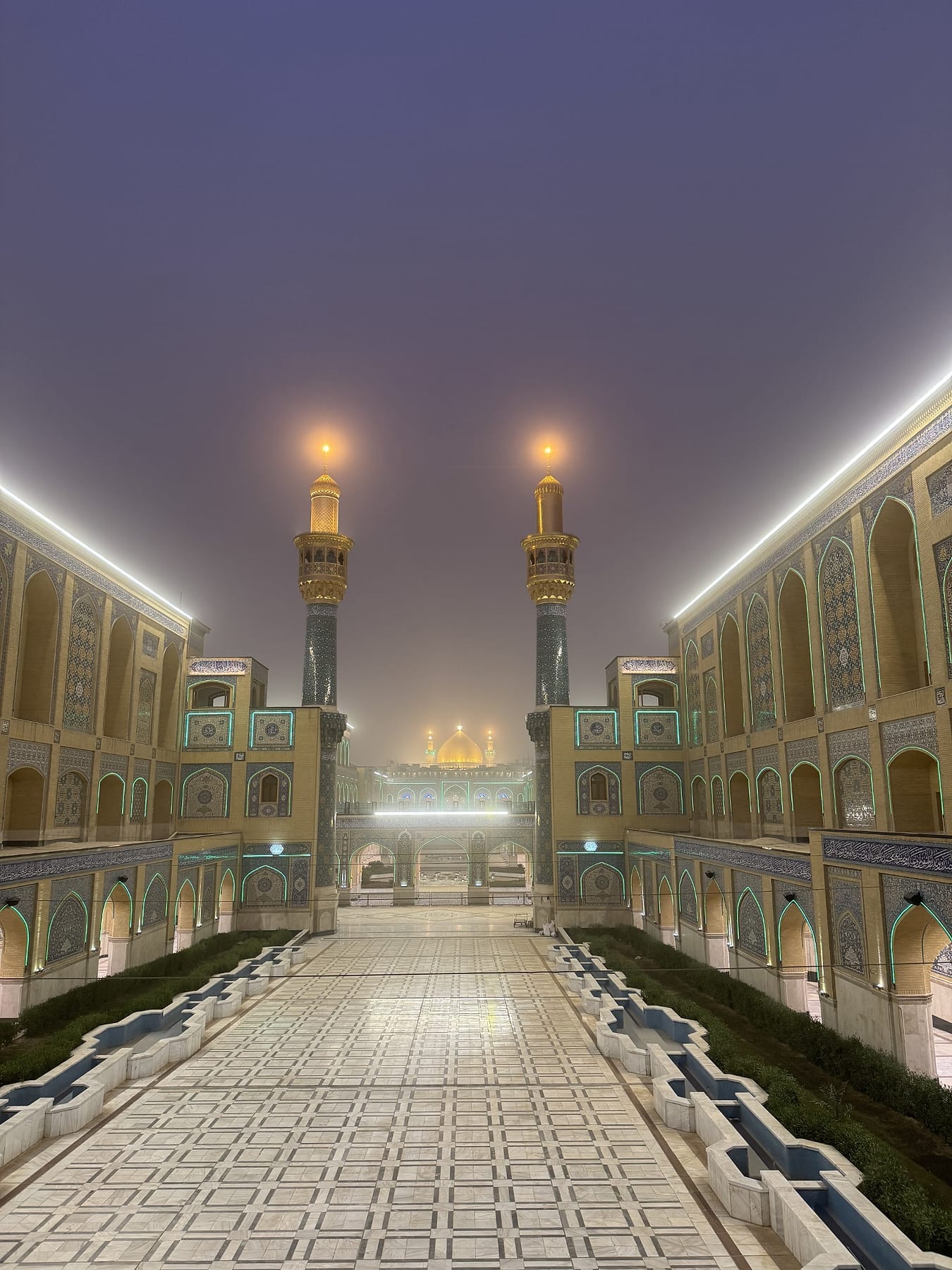
The same approach on a misty night. 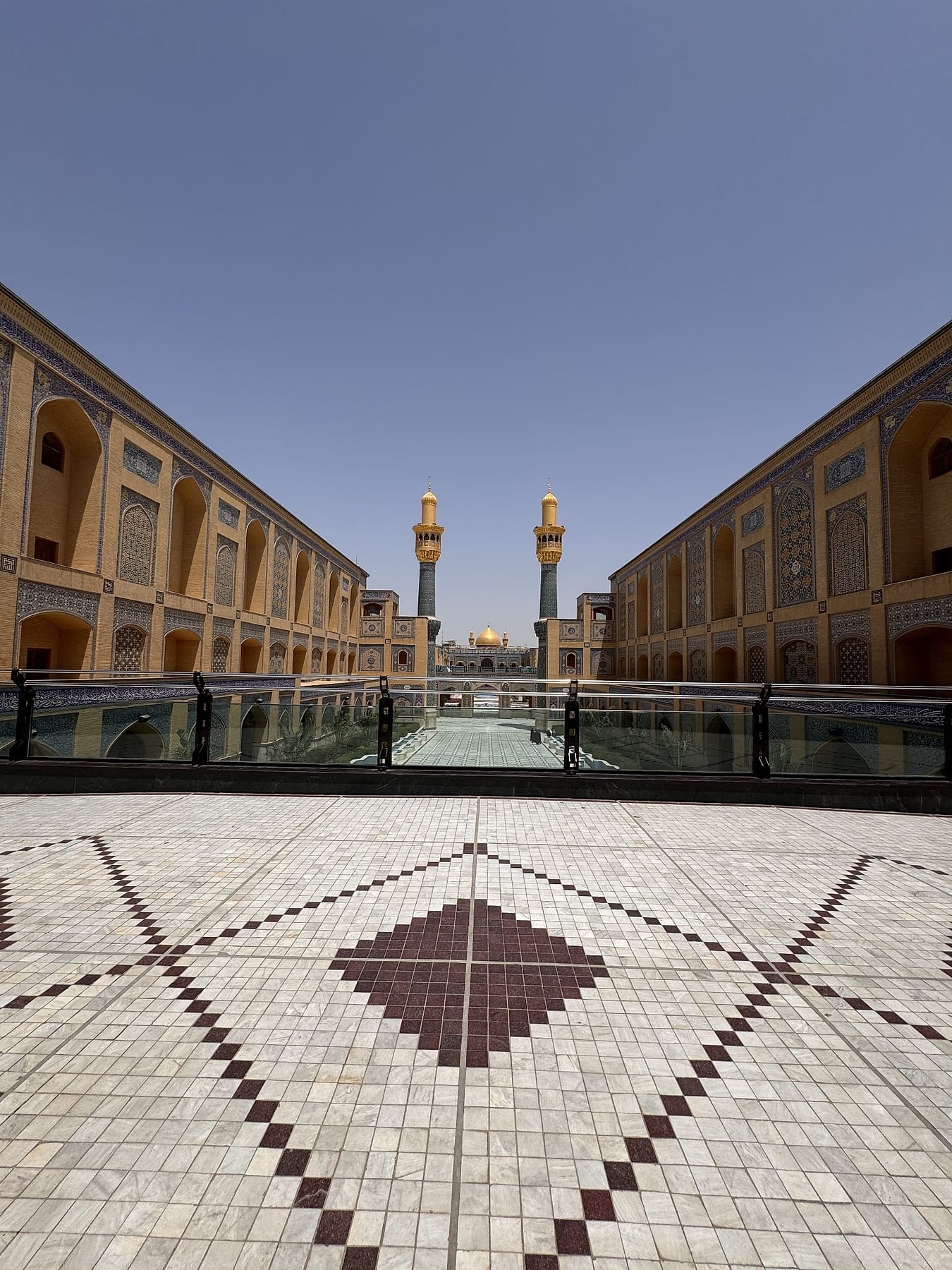
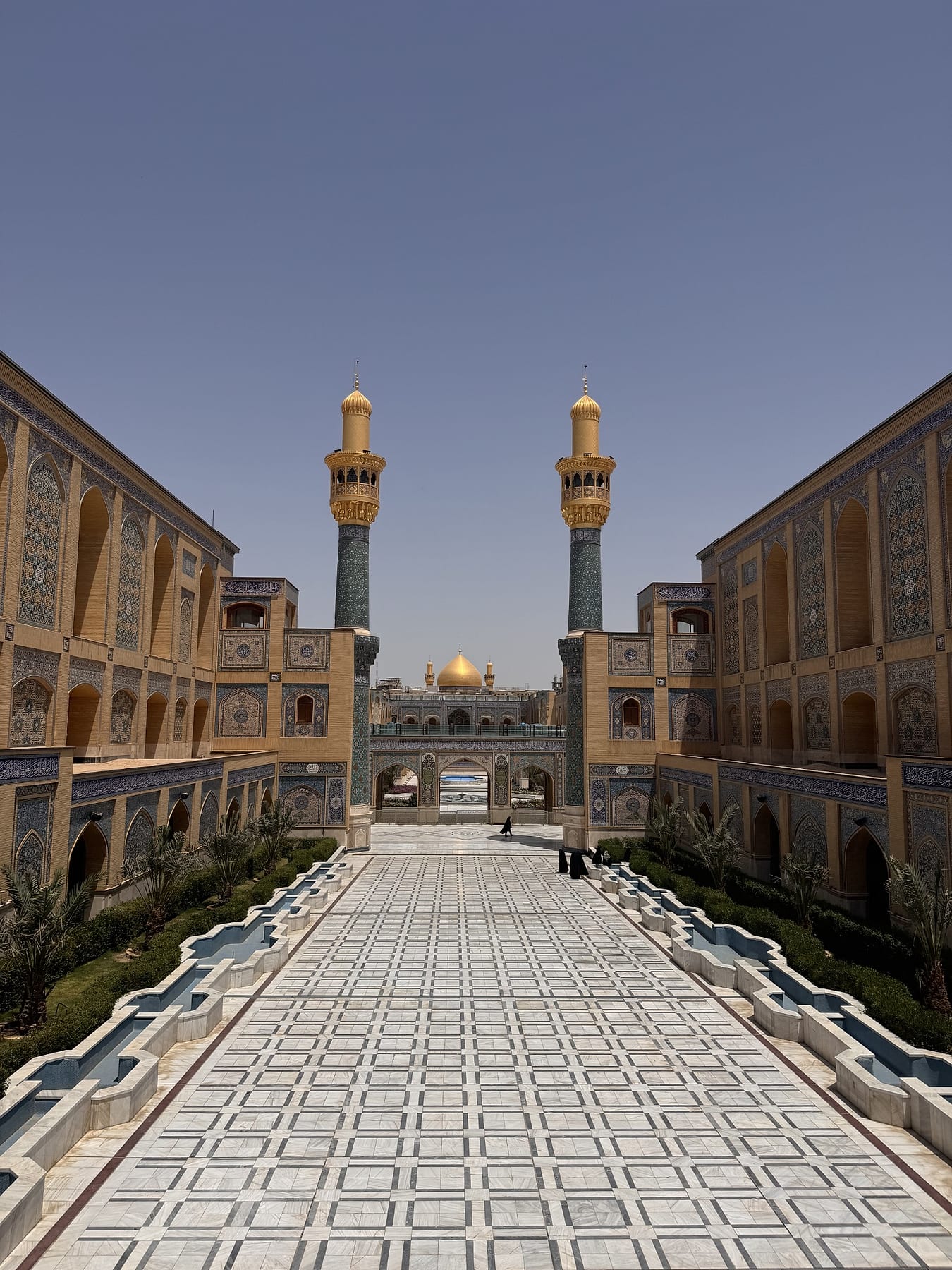
Patterned paving in the outer courtyard.
Part 6
Continue your journey
Sites often visited on the same trip, and further reading.
Cemetery · Najaf
Wadi al-Salam Cemetery
A very large historic cemetery in Najaf, close to the shrine of Imam Ali (as), where many believers have chosen to be buried.
Summary only, full guide comingMosque · Kufa
Great Mosque of Kufa
One of the oldest mosques in Islam, where Imam Ali (as) led prayers and was fatally struck during the dawn prayer in Ramadan 40 AH.
Full guide
Sources
Written by A humble human
Sources referred to
- al-Shaykh al-Mufīd, Kitāb al-Irshād: The Book of Guidance into the Lives of the Twelve Imams, trans. I. K. A. Howard (London: Balagha Books & Muhammadi Trust, 1981).
- Moojan Momen, An Introduction to Shiʿi Islam (New Haven: Yale University Press, 1985).
- Muḥammad b. Yaʿqūb al-Kulaynī, al-Kāfī, Kitāb al-Ḥujja.
- al-ʿAtaba al-ʿAlawiyya al-Muqaddasa (Imam Ali Holy Shrine), official website, imamali.net, accessed 14 October 2026.
- Shaykh ʿAbbās al-Qummī (d. 1359 AH), Mafātīḥ al-Jinān.
Spotted an error? Let us know. You can also read how we check content.